.svg)
.svg)
.svg)
November’s releases focus on one thing: making your cloud marketplace motion easier to run at scale. Across listings, co-sell, analytics, billing, and daily workflows, we removed friction that slows teams down and added visibility where it matters most. Here is what changed and why it matters.
TL;DR
- Launch API-based AI Agent listings on AWS directly from Clazar
- Get cleaner, more reliable AWS co-sell data with twice-daily syncs
- Understand usage and revenue drivers for VM listings across clouds
- Gain clearer contract and receivables visibility for Azure and GCP
- Move faster with smarter lists, saved analytics filters, and dark mode
- Support GCP reseller offers with full Salesforce field mapping
Launch and scale modern AI and VM listings with confidence
As cloud marketplaces evolve, teams need to support AI agents, usage-based products, and VM offers while maintaining consistency across clouds.
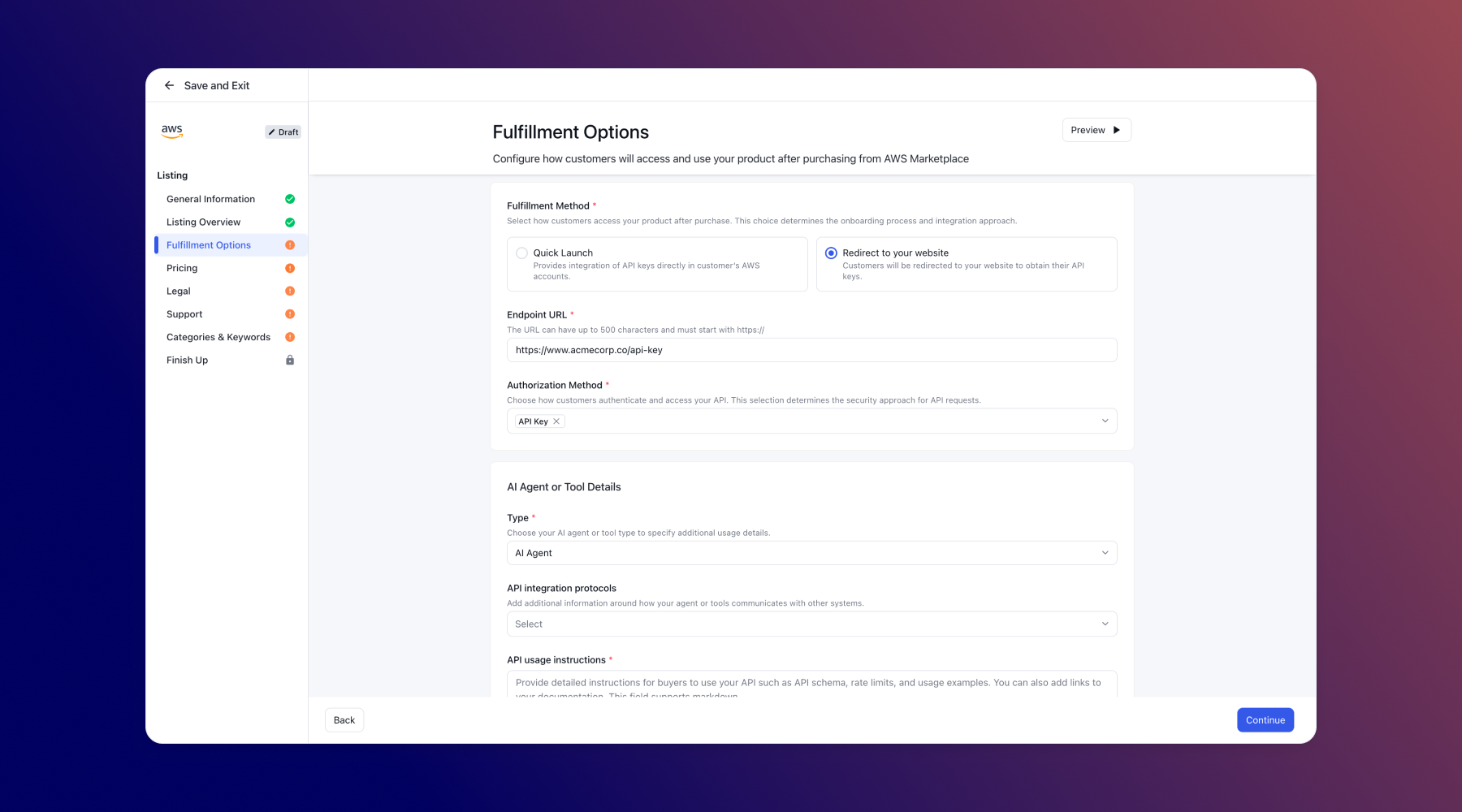
This month, Clazar expanded support for API-based AI Agent listings on AWS, allowing teams to create, configure, and sync agent-style products directly from the console. You can define fulfillment and authentication, upload OpenAPI specs, and complete pricing and categorization in one guided flow.
At the same time, we enhanced the Combined Cloud Usage Revenue dashboard for VM listings, making it easier to understand how infrastructure usage and customer adoption evolve across offers and plans.
Together, these updates help teams launch modern products faster and gain clearer insight into which listings drive real usage and customer value.
More reliable co-sell and contract data across clouds
Accurate data is foundational to forecasting, partner alignment, and cloud GTM operations.
To improve reliability, the AWS co-sell auto-update job now runs twice daily, reducing sync gaps caused by close date issues and ensuring customer and opportunity changes are reflected more consistently in AWS.
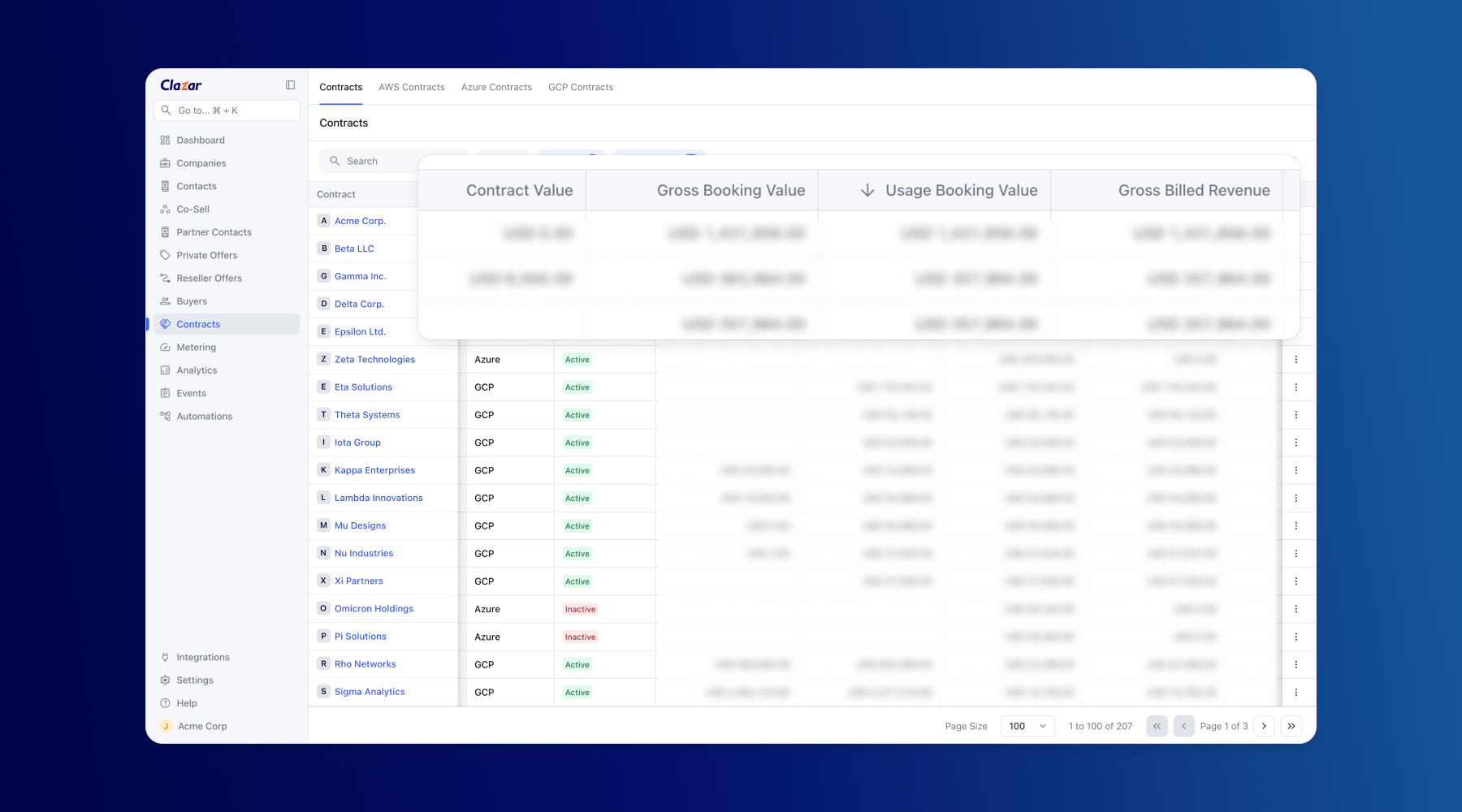
On the contracts side, we introduced aggregated billing properties for Azure and GCP contracts, including usage booking value, gross booking value, billed revenue, net disbursed revenue, and contract duration. These metrics provide sales and revenue operations teams with a faster way to assess contract performance, eliminating the need for manual reconciliation.
The new GCP Account Receivables Dashboard provides a real-time view of gross and net receivables, customer-level exposure, and billed versus undisbursed revenue at the contract level. While GCP does not support invoice-level reporting, this dashboard brings together the most critical signals in one place.
This makes it easier for finance and partnerships teams to stay aligned and proactively manage outstanding revenue.
Faster daily workflows with smarter defaults and all-new dark mode
Many of this month’s updates focus on improving the day-to-day experience inside Clazar.
Lists are now more powerful and intuitive, with inline cell editing, spreadsheet-style selection and navigation, quick property creation from the list view, and bulk actions for Contacts.
Analytics dashboards now automatically remember your last applied filters, so recurring analysis starts where you left off, with no additional setup required.
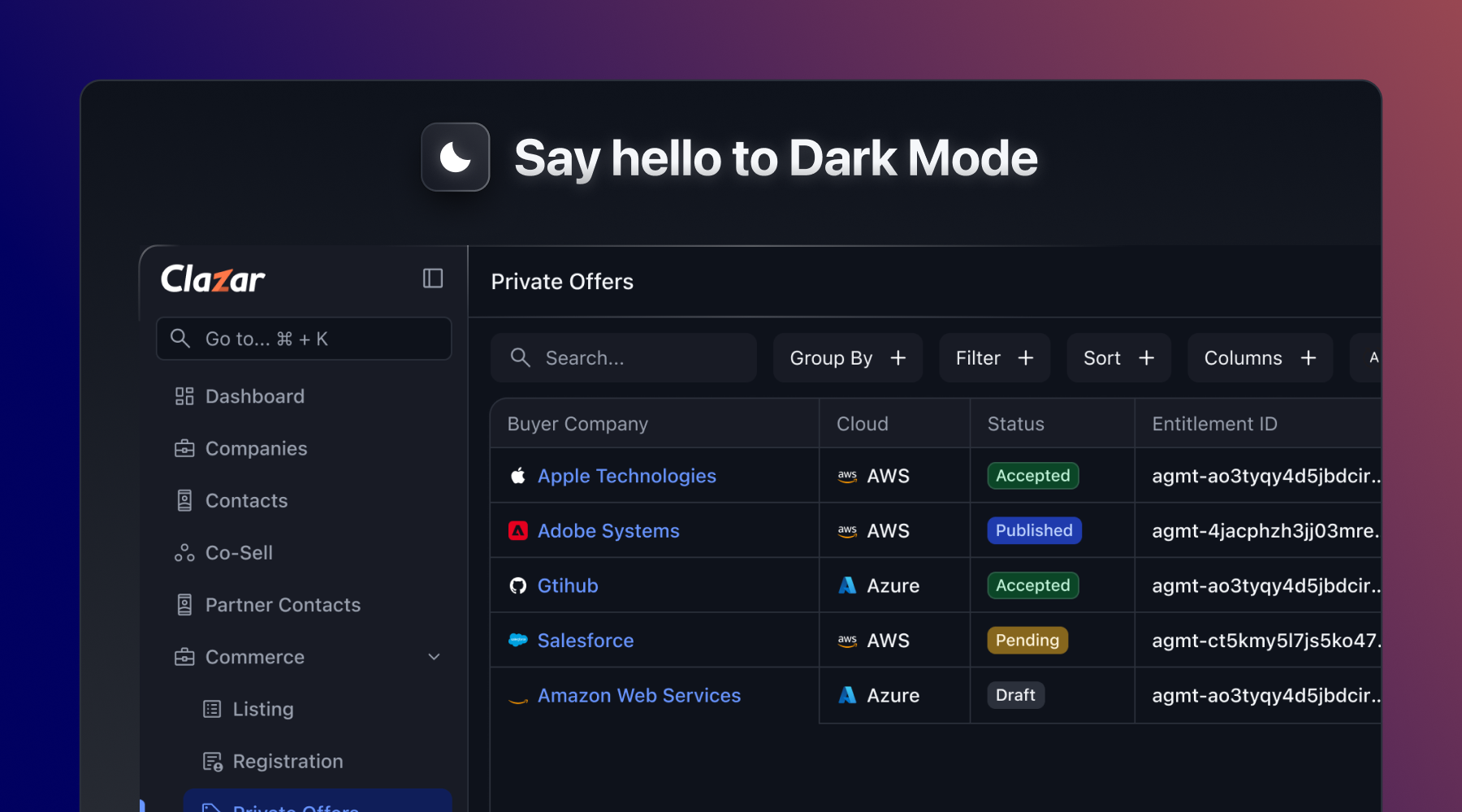
We also introduced dark mode across the Clazar app, giving users more flexibility and comfort during extended work sessions.
Stronger CRM alignment for GCP reseller offers
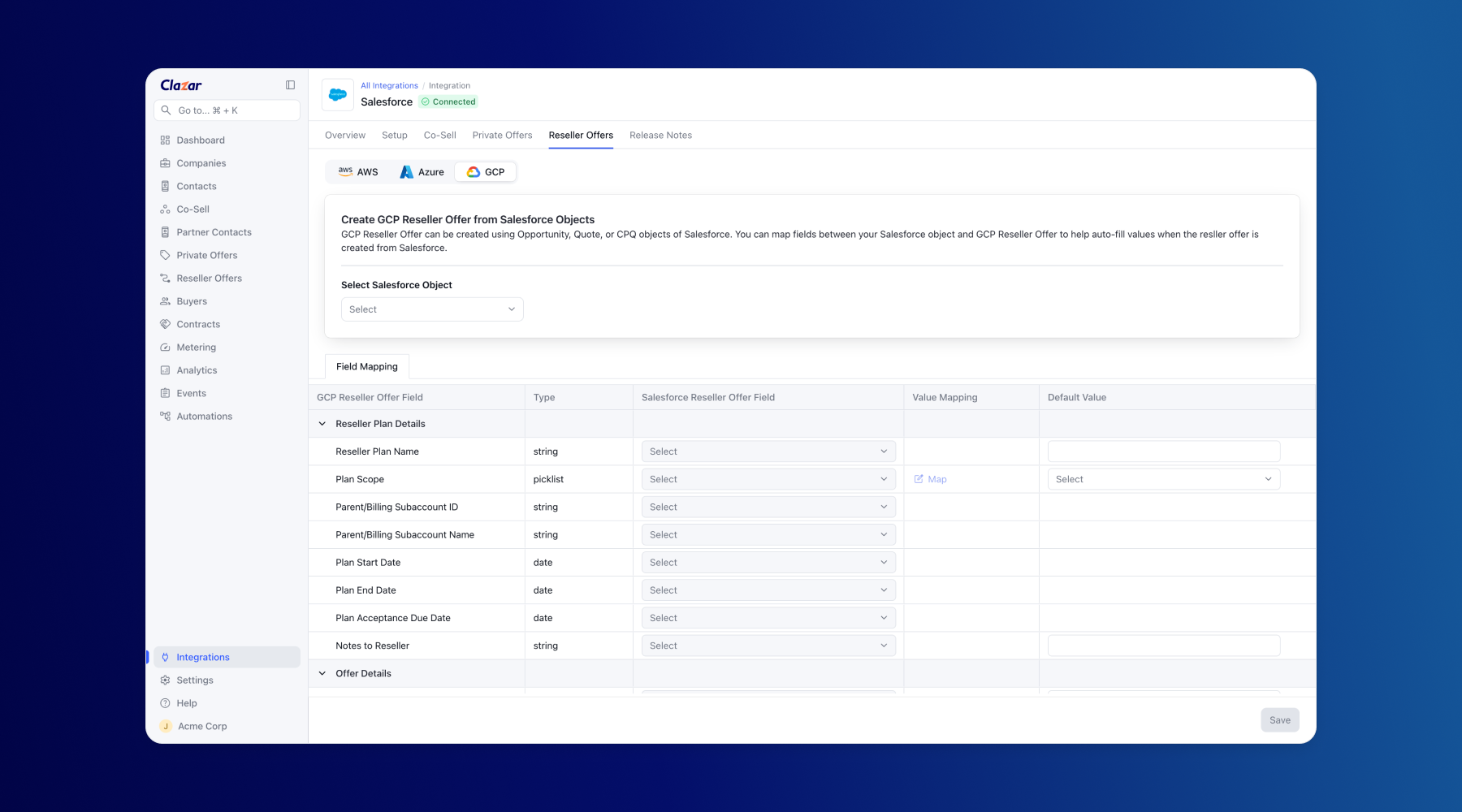
To support more complex GCP go-to-market motions, Clazar now supports GCP reseller offers with complete Salesforce field mapping and default values.
This ensures reseller deals sync cleanly between Clazar, GCP, and Salesforce, reducing manual updates and improving reporting accuracy across sales, partnerships, and finance teams.
FAQs
1. Who can use API-based AI Agent listings on AWS?
Any Clazar customer listing AI agent products on AWS Marketplace can use API-based registration. The workflow supports defining fulfillment, authentication, agent type, and OpenAPI specifications directly from the Clazar console.
2. Do I need to change anything to benefit from the twice-daily AWS co-sell sync?
No action is required. The updated sync schedule runs automatically, improving data freshness without requiring any configuration changes.
3. How is usage tracked in the Combined Cloud Usage Revenue dashboard for VM listings?
Usage is aggregated across clouds and displayed using instance-hour, core-hour, and customer usage metrics. You can drill down by offer ID, plan ID, and offer name to analyze trends at a granular level.
4. Which entities support bulk actions in Lists today?
Bulk actions are currently available for Contacts. Support for additional entities will roll out soon.
5. Does Clazar support GCP Reseller Offers?
Clazar supports GCP reseller offers with complete Salesforce field mapping and default values.